
manaslu circuit trek
manaslu circuit trek
Manaslu circuit is one of the challenging trekking holidays in Nepal which opened in the 90s for a limited number of travelers. As we start our journey passing by Arughat where we come across many small Gurung villages. Then a couple of days after gaining altitude, we shall be welcomed by Tibetan villages and culture after which the challenge of the Larke Pass awaits us. This is your alternative to the Annapurna Circuit if you want a similar type of circuit trek but with fewer people on the trail. With the construction of lodges on the trail and the eventual construction of the motor road up, this sure will change. Therefore, now might be the best time to discover this trail.
HIGHLIGHTS
- Diversity of landscape & trail less traveled than the Annapurna Circuit
- Traditional villages and contact with rural Nepal
- Challenge of the Larke Pass – 5135m
- Pung Gyen monastery and the panorama
ITINERARY
After passing through immigration at Tribhuwan International Airport and collecting your baggage. You can find our airport representative waiting for you outside the airport. You will be taken to the vehicle that has been sent for you which shall take you to your hotel in Kathmandu. According to the time you arrival, you might have time to discover the surrounding area or some of the heritage sites that are situated around.
Today is a free day so that we can process your special permits to the restricted region of Manaslu whereas you can enjoy the Heritage sites around the valley of Kathmandu. We suggest the program below for your free day in Kathmandu.
After breakfast, your guide will meet you at the hotel and we shall head to Kathmandu Durbar Square. We shall visit the temple of the living goddess – Kumari and many other temples and monuments that form a cluster in this area. After this, we shall head to the monkey temple which is
situated on a hilltop and you can have a birds-eye view of the city of Kathmandu from here. Then we drive to Patan which is another part of the Kathmandu valley which is famous for it’s arts. You can find numerous idol shops and craftsmen here in small alleys getting about their crafts.
Early in the morning, we can catch our buses and leave for our destination of the day – Machha Khola – 900m. We follow the river to the point where the Budhi Gandaki meets Tirshuli from where we turn north. Upon reaching Arughat which is the biggest settlement of the place we change our vehicle and then head towards our lodge in Machha Khola – 900m.
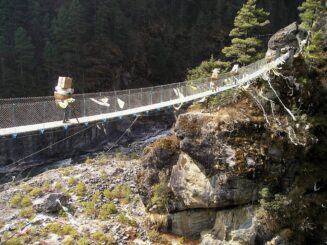
Crossing the river, we head upstream to the village of Khorla Besi and then continue to Tatopani. The valley becomes very steep here and is impassable. Our route here switches to the left side via a suspension bridge. After going through a short section of the forest we shall reach Dobhan which makes for a good lunch spot. Then we continue and make a short sharp climb to Lauri. Here we cross the vana river on the suspension bridge and then after an hour of walk, we shall reach the village of Jagat.
After passing through permit checks, we descend on stone steps until we meet the river and then ascend via terraced hills to Saguleri. Views of Sringi Himal – 7187m makes it’s appearance now and then. At Gata Khola, we cross the river via a suspension bridge and then make a steep ascend to Philim where we shall arrive in 3hrs. After an hour more of trekking, we reach Chisapani. From here the trail goes across the hillside on a contouring path. Pine trees become evident here as we enter a more alpine zone. The trail then heads via the junction for the steep trail towards Nyak and shortly enters a section of the gorge where the trail ascends and descends across vegetated walls of the canyon. At places, the trail is cut into the cliff walls. Here occasional views of Ganesh 4 are possible. Crossing the river we have a short ascend before an easier stage to the next bridge where we cross to the southwest and climb up via Phewa to reach Deng.
Today we leave Deng behind and descend to the river. Then make a steep climb to Rana. An hour ahead, with quite a number of ups and downs we reach Bihi. Beyond the village, we cross the Serang Khola and ascend to a trail that rises high above Budhi Gandaki river. After around 2.5hrs of walking
from Bihi we arrive at Ghap. We can see strong Tibetan influence from this point around in the villages. The walk is cooler now as we gain altitude and enter alpine forest of pine and juniper. We cross the river again and make a long ascend to the village of Namrung.
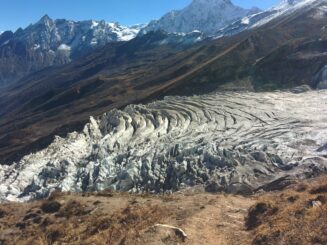
Upon leaving Namrung we pass by many fields and grasslands as we go via Banjam village. Then we make a steep climb to reach the beautiful settlement of Lihi. Here we cross a stream and pass by the village of Sho. Just above this village splendid views of the Manaslu itself greet us. After 3 hrs of walking, we reach Lho where we shall have lunch with great views of Manaslu. Then we follow the river and in a few hours of climb via the forest and a few stream crossings we shall reach Shala. Ahead we cross the outflow of Pungen Glacier. We then go downhill as we reach the area of Samagaon. Upon reaching Samagaun we can get splendid views of Mt. Manaslu which is one of the major highlights of this trek.
It’s a free day for acclimatization. You will have the option to climb up to the Manaslu Base Camp today or just take easy strolls around the village of Samagaon. The views of Birendra Tal are also spectacular from the mid-way to Manaslu Base Camp which makes the hike more tempting.
Today is a short trek day to the smaller village of Samdo. Samdo with it’s small settlement and Gompa while being surrounded by the mountains make an interesting stop. Enjoy your 2nd half of the day exploring the small village and it’s surroundings or relaxing around the lodge.
Leaving Samdo behind we cross a small stream that origins from Gya La ( a pass that takes you to Tibet). Passing by the ruins of Larke Bazaar we shall arrive at Dharmashala. Here we shall check into a very basic lodge. The meals are served in the stone-constructed Lodge but we shall sleep in the many tents that have been put in place for the travelers here.
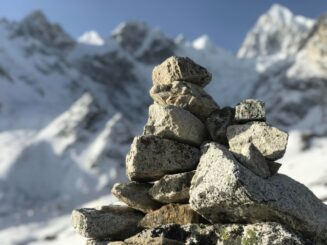
Early in the morning we shall get our pack breakfast and head for the Larke pass. After an initial climb we reach the ablation valley north of Larke Glacier. Then on it’s a steady plod up. We pass by small frozen lakes and then Larke Peak. We cross fields of rocks and icy landscape. After around 4hrs of having left the lodge the cairn and prayer flags is a welcoming sight. Great views of mountains (Himlung Himal and Annapurna II) shall welcome you. We then shall make a steep descent to a welcoming lodge in Bhimtang.
Leaving behind the high pastures of Bhimtang we now descend the valley of the Burdin Khola. We descend passing by beautiful forest of cedar and rhododendrons to Karche. Beyond the ridge of Karche we can see more greenery and dense forests we desend more and more in altitude. Passing by the village of Gho and Tilje we arrive at Dharpani by late evening.
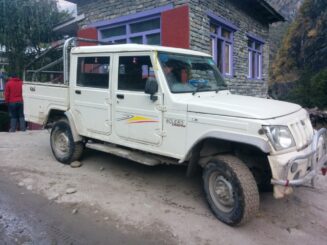
Today we board our jeeps and head down the gravel road to Besisahar. Upon reaching Besishar we shall have lunch. Then we shall board our vehicle and uon reaching Tirshuli make a turn towards Kathmandu. Upon arrival we shall check into our hotel.
Be transferred to the airport according to your flight schedule. Wish you had a great journey and we look forward to welcoming you to Nepal again.
INQUIRE THIS TRIP
GALLERY
TRIP DETAILS
- 03 nights accommodation at Hotel Nepali Ghar – Kathmandu with Breakfast on twin sharing basis
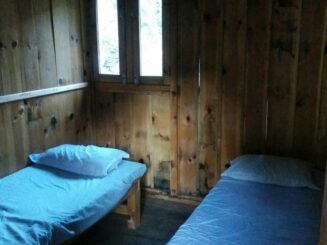
- 10 nights accommodation at Local Lodge with 3 meals per day on twin sharing basis
- 01 English trekking guide
- Sherpa Guide according to group size for groups bigger than 6 Travelers
- 01 Porter for every 2 clients carrying maximum luggage of 12kg per person
- All necessary trekking permits – ACAP and TIMS and Manaslu Special Permits
- Insurance for the Local Crew
- All Land Transfers required according to the program
- 24/7 support
- International Flight Tickets
- Travel Insurance – mandatorily
- Cost of Visa
- Lunch and Dinner during stay in Kathmandu
- Personal Equipments
- Wifi, Hot Water, Mineral Water, Hot Showers, Charging of gadgets and camera during stay at Local Lodges
- Entrance fees required for entering heritage sites
- Extra costs that may arise due to political, weather or natural causes
- Tips for guides and porter
- Everything not mentioned in Trip Includes
RELATED TREKS
FREQUENTLY ASKED QUESTIONS
Nepal is landlocked country located in southern Asia sandwiched between two Asian giants India and China. The capital city of the country is Kathmandu, commonly known as city of temples where we can explore traditional artistic beauty. Draped along the greatest heights of the Himalaya, Nepal is where the ice-cold of the mountains meets the steamy heat of the Indian plains. Moreover, it's a land of yaks and yetis, stupas and Sherpa’s and some of the best trekking on earth. The Himalaya's most sophisticated urban cultures took shape here, in the three great mini kingdoms of the Kathmandu valley- Kathmandu, Patan and Bhaktapur - home to a world-class artistic and architectural heritage.
Yes. visa is required for entering Nepal for all foreign nationals except Indian Passport holders Indian national require to carry passport or voting card if they are travelling Nepal through air flight; while if they intend to travel through land surface then they can travel with any kind of specific identity issue by Government of India or concerned authorized Government organization like student id card, aadhar card, pan card etc. Foreign national can obtain Nepal visa with an easy process from local consulates or embassy of Nepal located in your country or you can also granted on arrival visa directly at International airport immigration in Kathmandu or in any border immigration that touches with India & China. You need to carry couple of recent passport size color photo for visa process. You will get multiple entry visas valid for 15 days, 30 days & 40 days with the visa fee of USD 25, USD 40 & USD 100 respectively.
It generally depends upon the time and season of your travel. Nepal is a conservative country it advisable not to wear revealing clothes that looks offensive; it should not be too short or tight. Medium-weight and easy to wash cottons are recommended year-round. If you arrive during the winter months, than woolen sweaters, jackets or similar warm outfits is required. Carry comfortable walking shoes, including sandals and athletic shoes. A head cover may be required for women and men at sacred sites and places of worship. For trekking and adventure expeditions, you will either be provided in house or suggested advice prior your expeditions gets underway.
It entirely depends on what do you prefer and want to experience while trekking in Nepal. Our fleet of travel experts will provide you with a detailed insight helping you to decide the best. Primarily large numbers of visitors incorporate Kathmandu, Pokhara, and Chitwan National Park. Besides that going for distinct kind of activities such as rafting, canyoing, zip flying, bungy jumping, cycling or motorbike tour is also doable.
Nepal is safe to a great extent as it has a low crime rate and is generally a safe country. However it is better to be on safeguard and avoid demonstrations, rallies, and public gatherings. Our ever helpful and supportive guides or representatives are always there to inform about the safe/ unsafe areas of town and take evasive action while traveling alone. In the market areas, be vigilant of pick-pockets and distraction scams. Though unfortunate there is a very likely chance of an armed Maoist presence on many of the major trekking routes. They do demand a 'tax' before allowing trekkers to pass. Trekkers are advised to stay on established routes and walk in a group or with professional guides at all times.
English is not a native language of Nepal. However the best part is English is understood by majority of people in the metropolitan cities. In the villages, different ethnic groups speak their own languages. Only handful of people are well versed in English in trekking areas up in the mountains.
Yes, and make sure to bring prescriptions and the medications in its original containers to avoid custom inspection hassle.
No, prior experience backpacking or hiking is not required or expected to join any of our trips. The only thing required is your physical fitness and your mental strength.
No, we do not provide travel insurance, but we do work with an excellent broker who can help you find the policy to fit your needs.
Yes, it is always make sure the company follows all proper safety procedures. How is the equipment stored, maintained, and inspected? Do the company’s partners follow the same safety requirements? Your safety is of paramount at Surya Holidays. The guides that are with us are well trained not only to keep you safe out in the field but to be ready for the unexpected unseen natural disasters or otherwise. Our safety policy is guaranteed to uphold our strict standards. Whenever you consider travelling, it’s important to inquire about safety records. For us we’re happy to say, that it is flawless.
After arrival at Kathmandu (Tribhuvan International Airport – TIA), money changing services are available right there at the airport. It is advisable to change only a small amount as you can get better money rates are found in the city. Kathmandu also has an extensive selection of ATM machines; however, they often limit the transaction and daily amount for withdrawal.